Innate immune system presents since birth and before meeting
the pathogen. It is the first line defense mechanism and act immediately. Innate
immune system is less specific and has no memory.
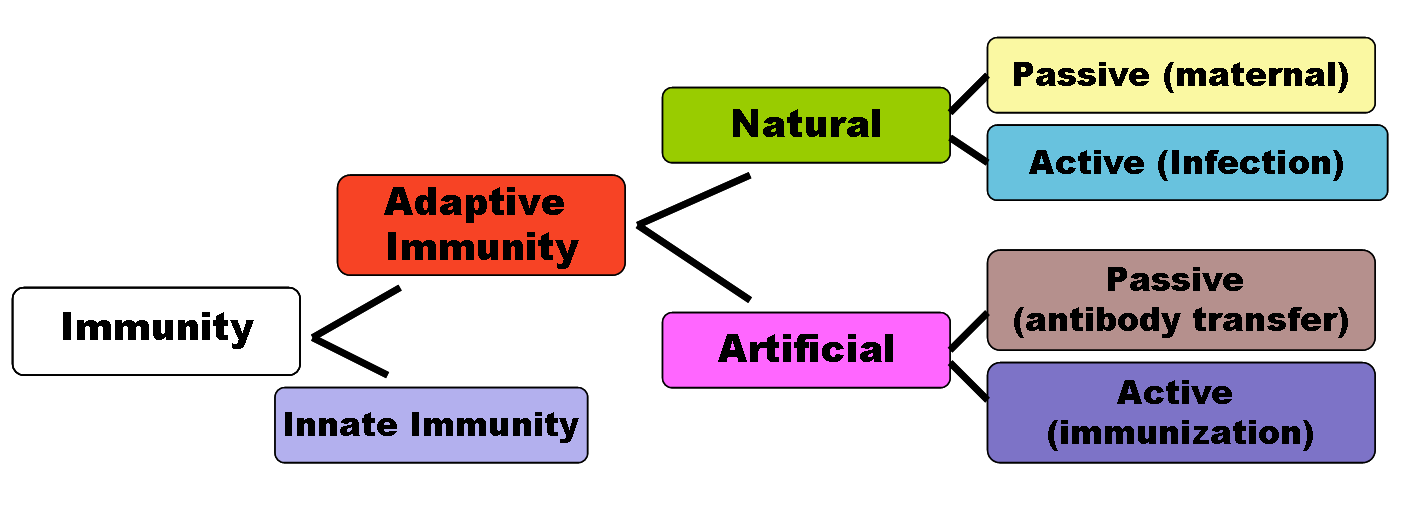
Mechanisms of innate immune system
Physical barriers
- Intact skin and mucus membrane prevent entering microorganisms entering body
Mechanical barriers
- Coughing and sneezing propel particles towards the mouth
- Flushing action of urine clears the urethra from organisms
Chemical defenses
- Sebaceous secretion consist of fatty acids an salt prevent colonization of harmful bacteria on skin
- Lysozyme in tears, saliva, and mucus membrane lyses the bacteria
- Acid PH in stomach, vagina destroy harmful bacteria
Normal flora
- Normal microbial flora in external and internal surface prevent colonization of pathogenic bacteria
Cellular factors
- Cells of innate immune system are neutrophils, macrophages, eosinophil, natural killer cells and mast cells
- Neutrophils and macrophages phagocyte the organisms and kill inside the cell
- Eosinophil extracellulary kill parasite
- Natural killer cell kills virally infected cell and tumor cell
- Mast cells are involved in allergic reactions
Humoral factors of innate immunity
- Humoral factors of innate immunity are complement protein, cytokines, cute phase protein,
- Complements are involved in producing inflammation, Opsonisation, lysis of pathogen
- Cytokines are involved as inflammatory mediates
- Acute phase protein has antibacterial activity